
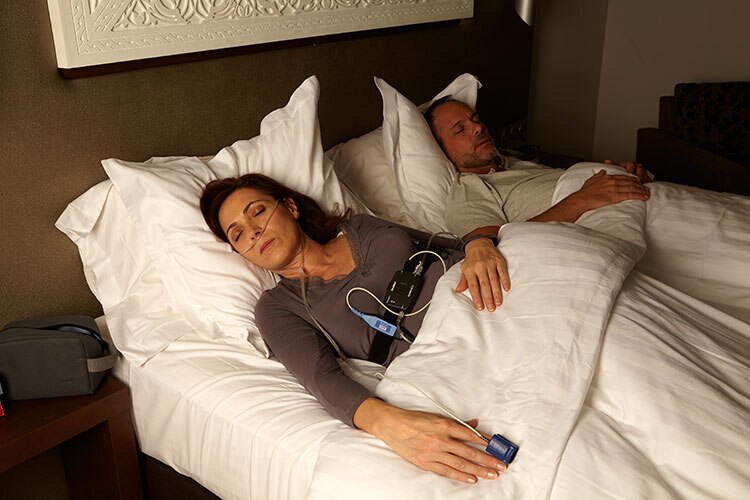
A sleep apnoea test is basically about catching breathing changes while they sleep. Not guessing. Not going off vibes. Proper data. And then turning that data into a clear plan.
What is a sleep apnoea test, really?
A sleep apnea test measures breathing, oxygen levels, and sleep patterns to check for sleep apnoea and how severe it might be. Depending on the setup, it can also track heart rate, body position, snoring, and chest or belly movement.
There are two main types. An in clinic overnight study (often called a polysomnogram) and a home based sleep apnoea test. Both can work well. The right option depends on symptoms, medical history, and what the clinician is trying to rule out.
A sleep apnoea test is not painful. Annoying, maybe. But it should not hurt.
Who typically needs a sleep apnoea test?
They might be sent for a sleep apnoea test if they snore loudly, stop breathing during sleep (usually noticed by a partner), wake up gasping, or feel exhausted even after a full night in bed. Morning headaches, dry mouth, and needing to pee multiple times overnight also show up a lot.
Risk factors matter too. Higher body weight, neck circumference, nasal blockage, alcohol use before bed, and a family history can all push a clinician towards ordering a sleep apnoea test. So can high blood pressure, atrial fibrillation, type 2 diabetes, or mood changes that are hard to pin down.
Sometimes it is not dramatic. It is just years of “they are always tired”.
What happens before the sleep apnoea test starts?
Before a sleep apnoea test, there is usually a short appointment or phone call where they go through symptoms, sleep habits, medications, and any other health conditions. They might be asked to fill out questionnaires like the Epworth Sleepiness Scale.
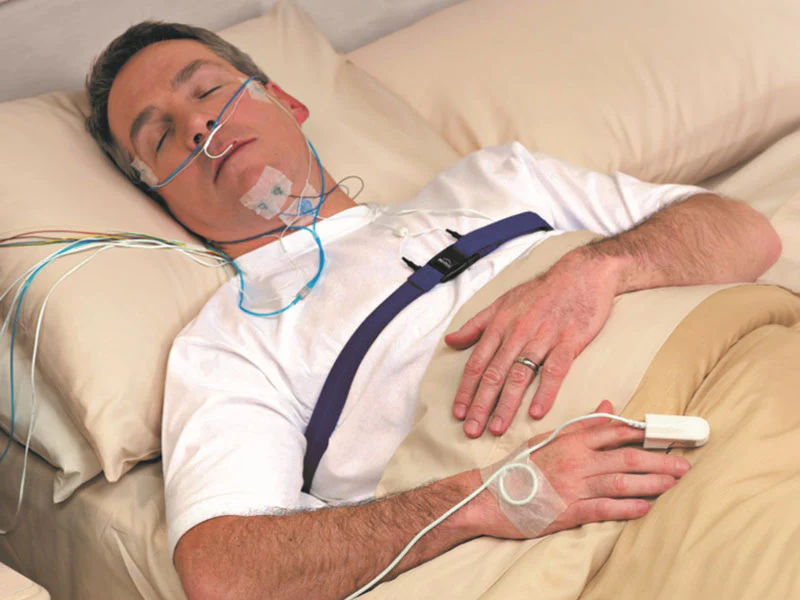
If it is a home sleep apnoea test, they may pick up a kit or have it posted out. They will get instructions and usually a quick demo. The key thing is not to overthink it. The equipment is designed for regular people at home, half asleep, in low light.
They will often be told to avoid naps late in the day and to skip alcohol on the night of the sleep apnoea test if possible. Not because alcohol is forbidden forever, but because it can skew breathing and sleep stages and make the results messier.
What happens during an at-home sleep apnoea test?
A home sleep apnoea test is usually done in their own bed, on their normal schedule. That alone can make the night feel less strange.
Most home kits include a finger probe to measure oxygen, a small device on the chest or belt to track breathing effort, and a nasal cannula or sensor near the nose to measure airflow. Some add a snore mic or position sensor. Reading a patient guide to home sleep testing can help people understand what each sensor measures and how to wear it correctly.
They fit the sensors before sleep, press start, and then try to sleep as normally as they can. If a sensor falls off at 2 am, they do their best to reattach it and go back to sleep. No heroics.
In the morning they remove the sensors, pack up the kit, and return it. Then the data gets reviewed. That review part is where the time can add up.
A home sleep apnoea test can be very accurate for moderate to severe obstructive sleep apnoea. It can be less helpful if the case is complex or if the clinician suspects other sleep disorders at the same time.
What happens during an in clinic sleep apnoea test?
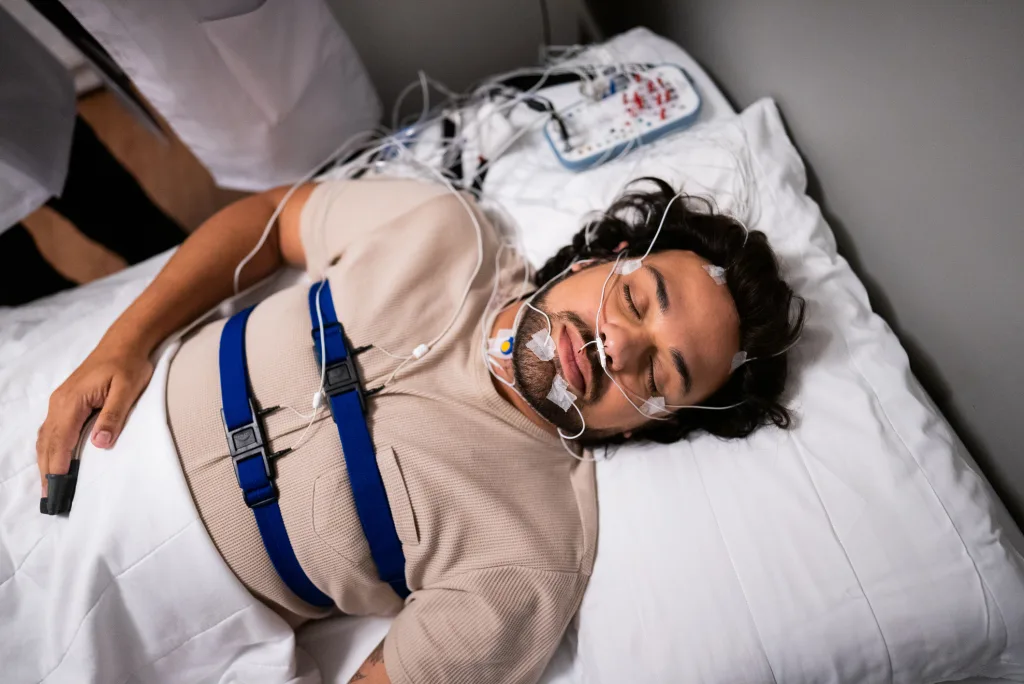
An in lab sleep apnoea test is more comprehensive. They sleep overnight in a sleep clinic, usually in a private room that looks a bit like a basic hotel room. Not glamorous, but not terrifying either.
A technician attaches sensors to the scalp (for brain waves), near the eyes (for eye movement), on the chin (muscle tone), on the chest (heart rate), and around the chest and abdomen (breathing effort). There is also airflow monitoring and an oxygen probe, and sometimes leg sensors for movement.
It sounds like a lot. It is a lot. But people do still sleep. Not perfectly, but enough for useful data.
The benefit is detail. An in lab sleep apnoea test can separate obstructive from central events, track sleep stages, and pick up things like periodic limb movements, parasomnias, or seizure activity if needed.
Is the sleep apnoea test uncomfortable or hard to sleep through?
The honest answer is, it depends. Some people barely notice the equipment after 20 minutes. Others feel like they are sleeping in a science project.
A sleep apnoea test can be uncomfortable mainly because of the unfamiliar sensors and the awareness of being monitored. The nasal cannula can feel odd. The finger probe can be mildly annoying. In a clinic, the scalp sensors can feel tight. Knowing what to expect during a sleep study can help reduce anxiety and make the experience feel more manageable.
Still, the goal is not to get a perfect night of sleep. It is to capture enough normal sleep to see breathing patterns. Even a few hours can be enough for a solid diagnosis.
If they are worried they will not sleep at all, it is worth telling the clinician ahead of time. Sometimes the plan can be adjusted.
What do results from a sleep apnoea test actually show?
A sleep apnoea test report commonly includes the AHI, the apnoea hypopnoea index. That is the number of breathing events per hour. It often also includes oxygen saturation lows, how long oxygen stayed below certain thresholds, snoring data, and sleep position effects.
Results are usually grouped like this, though exact cut-offs can vary:
- Mild
- Moderate
- Severe
But the number is not everything. Two people can have a similar AHI and feel totally different. Oxygen dips, arousals, and existing conditions matter. That is why the clinician interprets the sleep apnoea test in context, not as a standalone score.
How long do sleep apnoea test results take?
This is the part people hate. Waiting.
For a home sleep apnoea test, results often take a few business days to around two weeks. It depends on how quickly the device is returned, how busy the sleep service is, and whether a specialist needs to manually score the data.
For an in-lab sleep apnoea test, results can take one to three weeks, sometimes longer in high-demand areas. The recording is longer and the scoring is more detailed, so it can take extra time.
If symptoms are severe or safety is a concern, they should ask whether the clinic can expedite the sleep apnoea test review. Not every service can. But sometimes they can.
What happens after they get the sleep apnoea test results?
After the sleep apnoea test, the next step is usually a follow-up appointment to explain the findings and talk through treatment options. Whether the sleep study was done at home or in a clinic, the follow-up process is much the same. If obstructive sleep apnoea is diagnosed, common options include CPAP, mandibular advancement devices, weight management support, side sleeping strategies, reducing alcohol near bedtime, and addressing nasal blockage.
If the sleep apnoea test suggests central sleep apnoea or something more complex, they may be referred for additional testing or a different kind of therapy.
And yes, if CPAP is recommended, they might do a separate titration study or use an auto-adjusting machine. It is not always one and done.
A sleep apnoea test is really just the start. The useful part is what they do with the results.