
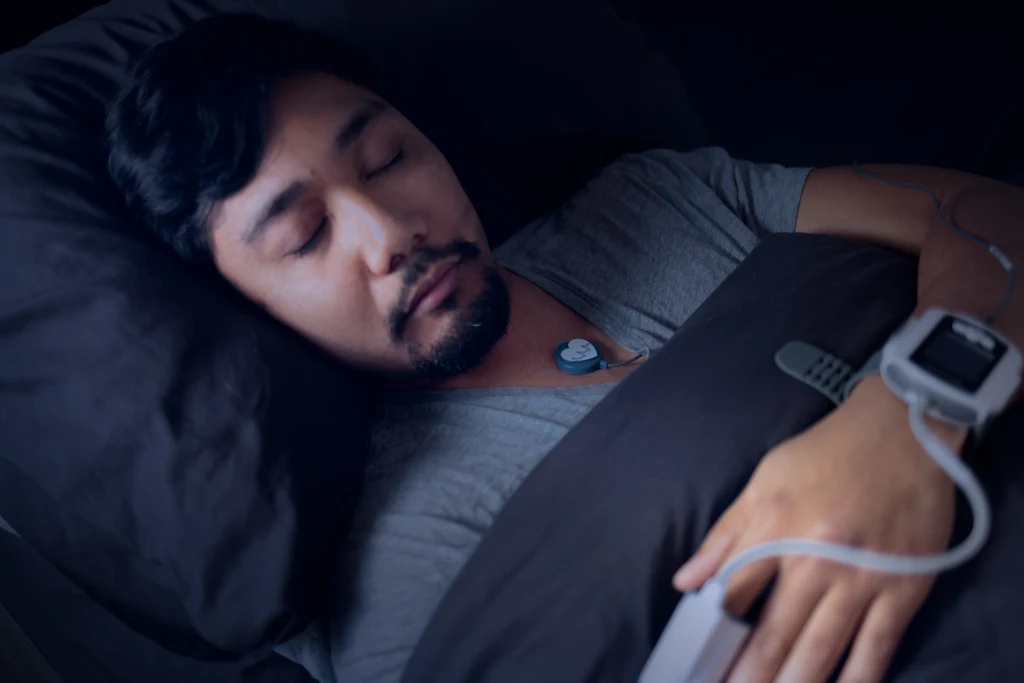
The short version is that both options exist. The longer version is that the right choice depends on what they are trying to diagnose, how complex their symptoms are, and what their doctor is actually looking for. A sleep study at home can be a really good fit for a lot of people, but it is not a perfect replacement for an in-clinic test. Not always.
Can they do a sleep study at home?
Yes, they often can. A sleep study at home is commonly used to check for obstructive sleep apnoea, the most common type. This is the one where the airway collapses or narrows during sleep, causing snoring, breathing pauses, and repeated micro awakenings. People might not even remember waking up. They just feel wrecked the next day.
A sleep study at home usually involves a small device they take home, set up themselves, and wear overnight. It typically measures breathing effort, airflow, oxygen levels, and heart rate. Some kits also track body position and snoring. It is simpler than the clinic setup, but that is kind of the point.
For many people, a sleep study at home is more comfortable, cheaper, and easier to schedule. They sleep in their own bed, follow their normal routine, and there is less of that weird first night effect where nobody sleeps properly because the situation is unfamiliar.
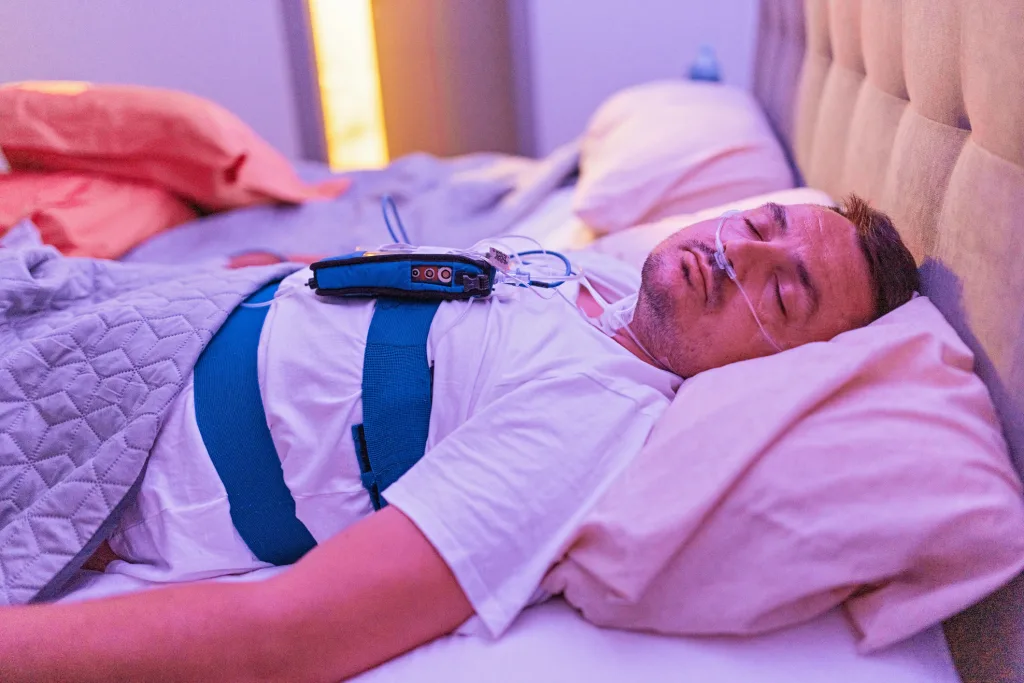
Do they have to go to a clinic for a sleep study?
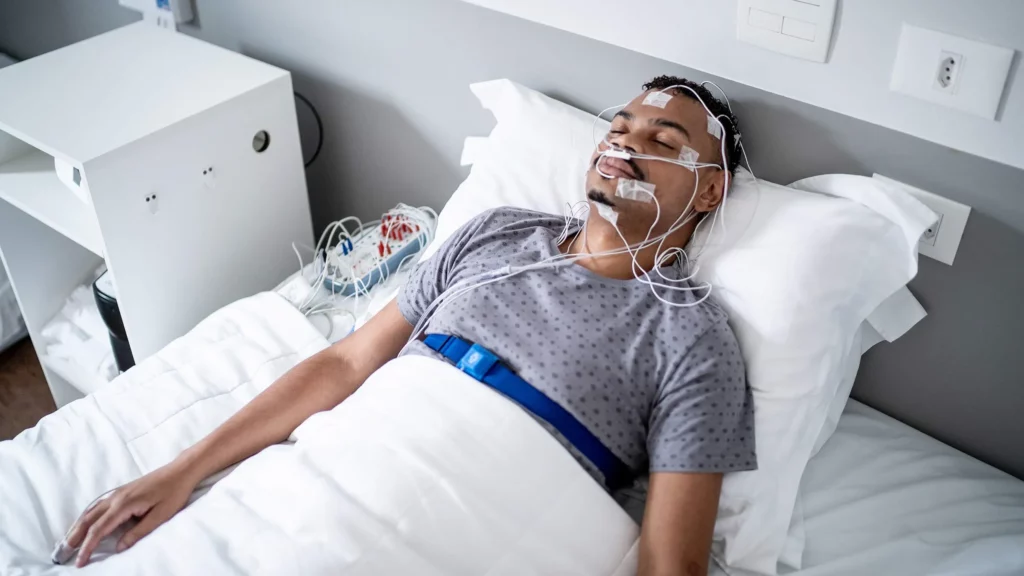
Sometimes, yes. An in-clinic sleep study is usually called polysomnography. It records more detail than a sleep study at home, including brain waves, eye movements, muscle activity, leg movements, breathing, and oxygen levels. This matters because some sleep problems are not just about breathing.
If someone has symptoms that suggest conditions like central sleep apnoea, narcolepsy, REM behaviour disorder, nocturnal seizures, or complex insomnia, clinicians often prefer an in-clinic test. It is more comprehensive, and a technician can adjust sensors if something goes awry during the night. That alone can make results more reliable.
Also, if a person has significant medical issues, like serious heart or lung disease, their doctor may recommend clinic monitoring first. It is not about making things harder; it is about safety and accuracy.
What is the real difference between a home test and a clinic test?
A sleep study at home is narrower. It is designed to answer a specific question, usually: is obstructive sleep apnoea likely, and how severe is it?
An in-clinic study is broader. It can look at sleep stages, arousals, movement disorders, and unusual behaviours. It can separate out whether someone is awake but lying still or genuinely asleep. A sleep study at home cannot always do that because it usually does not include EEG brain wave monitoring. Learning about the different types of sleep studies can help explain why some people are referred for in-lab testing instead of a home study.
That said, the simplicity of a sleep study at home is why it is offered so often. For straightforward suspected obstructive sleep apnoea, it can be enough to start treatment decisions like CPAP therapy or a mandibular advancement device, depending on what the clinician recommends.
Who is a good candidate for a sleep study at home?
Generally, they are a good candidate if they have a high likelihood of obstructive sleep apnoea and no major complicating symptoms. The classic signs are loud habitual snoring, witnessed breathing pauses, waking up choking or gasping, morning headaches, dry mouth, and excessive daytime sleepiness.
A sleep study at home is also often considered if they cannot easily attend a clinic due to location, work, caring responsibilities, anxiety about sleeping in a lab, or cost. In Australia, costs vary depending on provider and whether it is arranged through public or private pathways, but it is common for people to compare prices and ask what their insurer covers. They might see fees in the hundreds of £ for home testing, and more for in clinic testing, though it can vary a lot.
Still, if they are unsure, it is worth them asking the referring doctor why a sleep study at home is being suggested. Sometimes it is the right first step. Sometimes it is not.
When is an in clinic sleep study the better option?
If the symptoms are messy, the clinic study is usually better. For example, if they have insomnia plus daytime sleep attacks, or if they are acting out dreams, or if they have unexplained movements at night. Or if they already tried a sleep study at home and it came back negative, but they still have strong symptoms. Home tests can miss cases, especially mild ones, or if the night of testing was unusually good.
An in clinic test is also more appropriate when they need a split night study, where diagnosis happens in the first part of the night and CPAP is trialled in the second. That kind of setup is not the standard sleep study at home experience.
How accurate is a sleep study at home?
For moderate to severe obstructive sleep apnoea in people with a high pre-test probability, a sleep study at home can be quite accurate. But accuracy drops when the situation gets more complex or when the case is mild.
One issue is that a sleep study at home can overestimate total sleep time because it often assumes individuals are asleep when they are actually awake but lying still. That can make breathing events seem less frequent per hour of sleep than they truly are. It is a technical detail, but it can change the interpretation. Learning how sleep study results are interpreted can help explain why a specialist may recommend further testing in some cases.
Additionally, sensors can be displaced during the night. If the airflow cannula slips or the oximeter comes loose, the data quality can suffer. Clinics often provide clear instructions, and some devices are designed to be more foolproof, but this still happens.
This does not mean a sleep study at home is ineffective. It just means it is targeted. It is one tool, not the whole toolbox.
What happens after the results come back?
Usually, the results go back to the referring GP or sleep physician, and they interpret them in context. If a sleep study at home shows obstructive sleep apnoea, treatment might start straight away. That might include CPAP, weight management strategies, positional therapy, reducing alcohol intake at night, or referral for an oral appliance. It depends on severity, anatomy, and preference.
If the sleep study at home is negative or borderline but symptoms are still strong, individuals may be sent for an in-clinic sleep study. This is common. People sometimes feel frustrated by that, but it is part of narrowing down what is going on.
If an in-clinic study finds a different disorder, treatment can look very different. That is why choosing the right test matters.
So, can they do a sleep study at home or do they have to go to a clinic?
They can often do a sleep study at home, and for a lot of people it is the easiest starting point. But they do not always get to choose purely based on convenience, because the clinical question comes first. If the goal is a broad assessment, or if symptoms suggest something beyond straightforward obstructive sleep apnoea, an in-clinic study is more appropriate.
In practice, many people start with a sleep study at home and only move to a clinic test if needed. Others go straight to the clinic because their situation is more complex. Either way, the best move is simple. They should talk to their GP or sleep specialist, describe symptoms honestly, and ask which type of sleep study will actually answer the question. The right test is the one that gets them to a real solution, not just a report.